
Have you ever felt like you have «too many tabs open» in your brain? It's not a lack of cognitive capacity; it's that you're trying to operate in an environment designed for distraction. The Mental saturation it's not happening because your memory is failing, but because the Digital chaos that we live in fragments our attention and drains our energy before we can accomplish any important task.
The Illusion of Bad Memory
We often blame our biology when we forget a meeting or lose an important file. However, the human brain didn't evolve to store infinite lists of digital to-dos, but to process ideas and solve problems. The problem lies in the constant switching between applications—a phenomenon known as context switching — can reduce your productivity by as much as 40%. Every time you switch from a chat to an email or a translation, your brain pays an «attention tax» that feels like exhaustion or a poor memory.
The Cost of Mental Saturation
We live in an age of fragmentation. The average professional switches windows or applications more than a thousand times a day. This constant scattering generates a cognitive load that the brain cannot process, resulting in:
- Loss of deep focus: The inability to concentrate on a single complex task for more than a few minutes.
- Increase in human error Scheduling appointments at incorrect times or sending incomplete information due to the rush of closing tabs.
- Technology stress A constant feeling of anxiety due to the number of notifications and sources of information that demand our attention.
Digital Organization Strategies to Regain Control
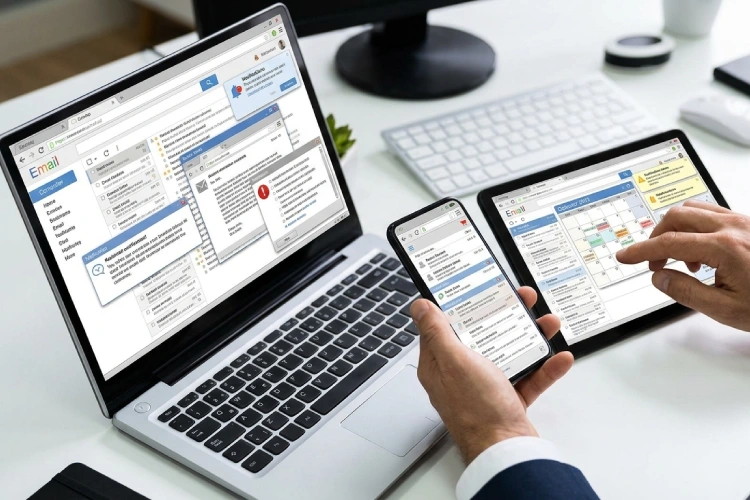
To combat this chaos, the solution is not to «try harder,» but to optimize the environment. digital organization effectively acts as an extension of your mind, allowing you to free up space for creativity.
1. Tool centralization
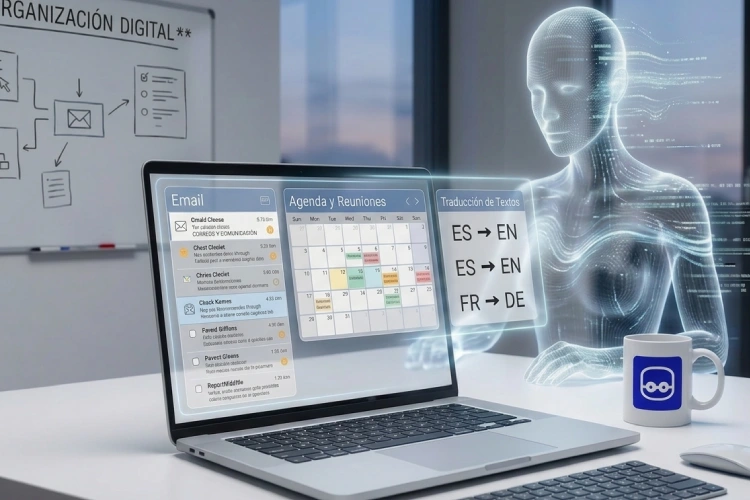
The key to reducing saturation is to stop jumping between multiple platforms. Using an interface that consolidates email, calendars, and translation tools allows the brain to maintain a linear and coherent workflow.
2. Operational delegation
Here is where a virtual assistant Make a difference. By delegating repetitive tasks like inbox filtering or schedule coordination, you eliminate mental clutter and focus solely on strategic execution.
3. The Power of the Single Interface
Working from a single «all-in-one» application drastically reduces tab fatigue. By having control of your communication and schedule in one place, you eliminate the need for your memory to act as a reminder filing cabinet.
Conclusion: Free your mind
Your memory is a processing tool, not a hard drive. The real secret to productivity Modernity is no longer about remembering more, but about managing less chaos. By implementing digital organization systems and having the support of a virtual assistant, you allow your mind to return to what it does best: creating and innovating.
Frequently Asked Questions
Why do I feel like I'm forgetting things if I used to have a good memory?
It's not that your memory is failing; it's that the Digital chaos and the Mental saturation They fill your «working memory» with micro-tasks (like remembering an open tab or a notification), leaving little room for important information.
Digital organization helps reduce stress by creating a more streamlined and efficient way to manage tasks, information, and responsibilities. This can lead to several benefits: * **Reduced Clutter:** Physical and digital clutter can contribute to feelings of overwhelm. Digital organization, through well-structured files, folders, and task management systems, minimizes this by keeping everything in its place and easily accessible. * **Improved Time Management:** When information and tasks are organized digitally, it becomes easier to prioritize, schedule, and track progress. This clarity reduces the feeling of being rushed or constantly behind, a common source of stress. * **Easier Access to Information:** No more digging through piles of paper or endless email threads. Digital organization allows for quick retrieval of documents, contact information, and project details, saving time and preventing frustration. * **Enhanced Productivity:** Being organized means less time spent searching and more time spent doing. This increased efficiency can lead to a greater sense of accomplishment and control, reducing the stress associated with feeling unproductive. * **Better Planning and Foresight:** Digital tools can help visualize schedules, project timelines, and future tasks, allowing for better preparation and anticipation of potential issues. This proactive approach can prevent last-minute panics and the stress they cause. * **Reduced Mental Load:** When you can rely on a digital system to remember things for you (like appointments, deadlines, or important notes), it frees up your mental energy. This reduced mental load can significantly lower anxiety levels. * **Streamlined Communication:** Organized digital communication (e.g., using shared project management tools, well-labeled email folders, or clear communication channels) reduces confusion and misunderstandings, which are common stressors in personal and professional life. * **Flexibility and Accessibility:** Digital organization often allows access to information and tasks from various devices, providing flexibility and the ability to manage things on the go. This can reduce stress by enabling you to stay on top of things regardless of your location. * **Sense of Control:** Ultimately, digital organization fosters a sense of control over one's environment and responsibilities. This feeling of being in charge is a powerful antidote to stress and anxiety.
By centralizing your tools into a single interface, you eliminate the «attention tax» you pay when jumping between apps. This allows your workflow to be linear, reducing the anxiety caused by data dispersion.
Is a productivity app or a virtual assistant better?
An app is the tool where you organize work, but a virtual assistant it is who executes tasks for you. Combining both allows you to focus on strategy while the assistant manages operations.
What is context switching and how does it affect me?
It is the constant switching between tasks or applications. This phenomenon fragments your attention and can reduce your productivity up to 40%, and it is also the main cause of mental exhaustion at the end of the day.
Can I get my deep focus back?
Yes. The key is to clean up your digital environment, use a single interface for your communications, and delegate repetitive tasks. This frees up your mental space so you can refocus on complex tasks without interruption.